Buy aleksou.eu ?
We are moving the project
aleksou.eu .
Are you interested in purchasing the domain
aleksou.eu ?
domain@kv-gmbh.de · 0541-91531010
Buy aleksou.eu ?
What does homology mean?
Homology refers to the similarity between different organisms due to shared ancestry. It can refer to similar structures, genes, or traits that are inherited from a common ancestor. Homology is used in evolutionary biology to study the relationships between different species and to understand how characteristics have evolved over time. **
What are homology and analogy?
Homology refers to similarities in traits between different species that are inherited from a common ancestor. These traits are often structural or genetic in nature and can help scientists understand evolutionary relationships between species. On the other hand, analogy refers to similarities in traits between different species that are not inherited from a common ancestor but have evolved independently due to similar environmental pressures. While homology reflects shared ancestry, analogy reflects convergent evolution. **
Similar search terms for Homology
Top-Angebote
Products related to Homology:
-
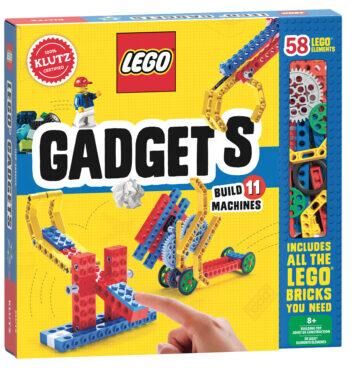
Klutz: LEGO GadgetsThis activity kit will have you building 11 machines including a gravity powered car and a wacky boxing robot. The fun doesn't stop once you've completed all of the projects in the book - open-ended prompts will inspire you to continue experimenting...24,99 $*Shipping: 0,00 $Secure redirect to the provider
-
Multisell Products Hub Magnetic Bottle Opener For Household Mineral Water Plastic Beverage Bottles And Cap Opening, Kitchen Accessories Gadgets whiteEffortless Cap Opening for Everyday Kitchens Upgrade your routine with this 1 pcs Kitchen Accessories Gadgets Magnetic Bottle Opener for Household Mineral Water Plastic Beverage Bottles and Cap Opening designed for convenience and comfort. It makes...34,97 $*Shipping: 0,00 $Secure redirect to the provider
-
HARPERCOLLINS Creative Confidence by Tom & David Kelley – Unleashing Your Creative Potential & Innovation MindsetA powerful and inspiring book from the founders of IDEO, the award-winning design firm, on unleashing the creativity that lies within each and every one of us. Too often, companies and individuals assume that creativity and innovation are the domain of the ‘creative types’. But two of the foremost experts in innovation, design and creativity on the planet show us that each and every one of us is creative. In an entertaining and inspiring narrative that draws on countless stories from their work at IDEO, and with many of the world's top companies and design firms, David and Tom Kelley identify the principles and strategies that will allow us to tap into our creative potential in our work lives, and in our personal lives, allow us to think outside the box in terms of how we approach and solve problems. ‘Creative Confidence’ is a book that will help each of us be more productive and successful in our lives and in our careers.4,95 £*Shipping: 1,99 £Secure redirect to the provider
-
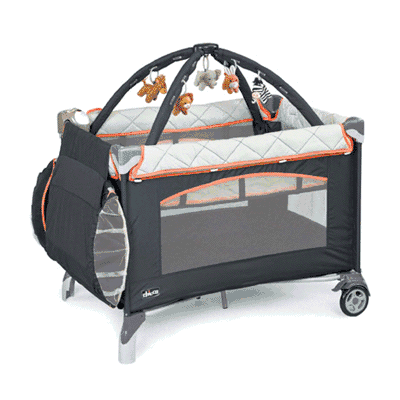
Chicco Lullaby Playard with Electronics in IcebergQuilted mattress is thickly padded for babys nap time or playtime comfort ; Removable mattress covering is easy to machine wash ; Changing table is elevated for ease of use and thickly padded for babys comfort ; Quilted bassinet is perfect for...159,99 $*Shipping: 0,00 $Secure redirect to the provider


-
Is it homology or analogy?
Homology refers to similarities in traits due to shared ancestry, while analogy refers to similarities in traits due to convergent evolution. For example, the wings of bats and birds are homologous because they both evolved from a common ancestor with wings, while the wings of birds and insects are analogous because they evolved independently in response to the similar selective pressure of flight. Therefore, the distinction between homology and analogy depends on the evolutionary history of the traits in question. **
-
Is this homology or analogy?
This is an example of homology. Homology refers to the similarity in characteristics between different species due to their shared ancestry. In this case, the similarity in the bone structure of the forelimbs of different vertebrate species is due to their common evolutionary origin from a common ancestor. Analogous structures, on the other hand, are similar in function and appearance but do not share a common evolutionary origin. **
-
Is task 4 an analogy or homology? If it is a homology or analogy, why?
Task 4 is an analogy. This is because an analogy is a comparison between two things that are similar in some ways but otherwise different. In this case, the comparison is between the task of identifying whether a given image is a cat or a dog and the process of identifying whether a given sentence is a statement or a question. Both tasks involve categorizing or classifying different inputs based on specific criteria, even though the inputs themselves are different (images vs. sentences). **
-
Why is task 4 a homology?
Task 4 is a homology because it involves identifying and analyzing the similarities and differences between two different organisms, the human and the chimpanzee. By comparing the genetic sequences and structures of these two species, we can gain insights into their evolutionary relationship and shared ancestry. This type of comparative analysis is a fundamental aspect of homology studies, as it helps us understand how organisms have evolved over time and how they are related to each other at a genetic level. **

How meaningful is homology and analogy?
Homology and analogy are both important concepts in biology that help us understand the relationships between different species. Homology, which refers to similarities in traits due to shared ancestry, provides valuable insights into evolutionary history and can help us infer common ancestors. On the other hand, analogy, which refers to similarities in traits due to convergent evolution, can help us understand how different species have adapted to similar environments or ecological niches. Both homology and analogy are meaningful in their own ways, as they provide valuable information about the evolutionary processes that have shaped the diversity of life on Earth. **
Why is task 4 considered a homology?
Task 4 is considered a homology because it involves identifying and comparing the anatomical structures of different organisms, specifically the forelimbs of vertebrates. By examining the similarities and differences in the bone structure and arrangement of these limbs, we can infer evolutionary relationships and common ancestry. This comparative analysis allows us to trace the evolutionary history of these structures and understand how they have been modified over time to suit the needs of different species. Overall, task 4 provides insights into the concept of homology by highlighting shared characteristics that are inherited from a common ancestor. **
Top-Angebote
Products related to Homology:
-
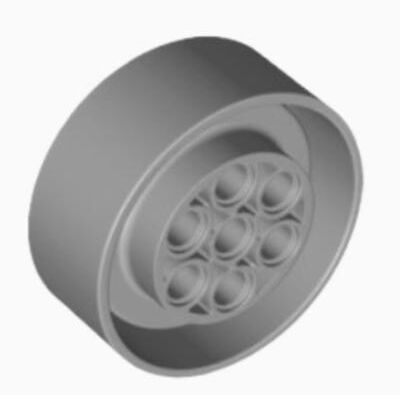
Lush Living Finds Perforated Brick Assembly Toy Accessories With Technology Mechanical Wheels Perforated Brick Assembly Toy Accessories With Technology Mechanical WheelsEnhance Creativity with Technology Mechanical Wheels Unlock the power of innovation with our technology mechanical wheels, designed specifically for perforated brick assembly toy accessories. Whether you are a hobbyist or a seasoned builder, these...43,97 $*Shipping: 0,00 $Secure redirect to the provider
-
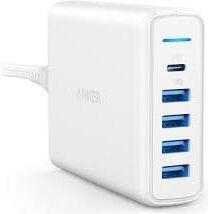
Anker PowerPort 60 W 6-Port Family-Sized Desktop USB Charger with PowerIQ Technology for Smartphones - White, NewThe Anker Advantage: Join the 10 million+ powered by Amazon's leading charging brand. Fast Charging Technology: PowerIQ and VoltageBoost combine to provide the fastest possible charge up to 2.4 amps per port or 12 amps overall (Qualcomm Quick Charge 2.0 not supported. For QC 2.0 charging, please see Anker's 18W USB Wall Charger). Ultra Powerful: 6 ports pump out 60 watts of power, enabling simultaneous multi-device charging. Certified Safe: Anker's MultiProtect safety system and UL certification ensure complete protection for you and your devices. Worldwide 100-240 volt AC input voltage What You Get: Anker PowerPort 6 (60W 6-Port USB Charging Hub), 5ft / 150cm detachable power cord, welcome guide, our fan-favorite 18-month warranty and friendly customer service.. Brand Anker Connectivity technology USB Connector type USB Type C Compatible devices Smartphones, Tablets, Laptop Compatible phone models All Smartphones Included components USB Cable Cable length 5 Feet Special feature Lightweight Design, Travel, Fast Charging Colour White Input voltage 100 Volts49,99 £*Shipping: 0,00 £Secure redirect to the provider
-
Klutz: LEGO GadgetsThis activity kit will have you building 11 machines including a gravity powered car and a wacky boxing robot. The fun doesn't stop once you've completed all of the projects in the book - open-ended prompts will inspire you to continue experimenting...24,99 $*Shipping: 0,00 $Secure redirect to the provider
-
Multisell Products Hub Magnetic Bottle Opener For Household Mineral Water Plastic Beverage Bottles And Cap Opening, Kitchen Accessories Gadgets whiteEffortless Cap Opening for Everyday Kitchens Upgrade your routine with this 1 pcs Kitchen Accessories Gadgets Magnetic Bottle Opener for Household Mineral Water Plastic Beverage Bottles and Cap Opening designed for convenience and comfort. It makes...34,97 $*Shipping: 0,00 $Secure redirect to the provider
-
What does homology mean?
Homology refers to the similarity between different organisms due to shared ancestry. It can refer to similar structures, genes, or traits that are inherited from a common ancestor. Homology is used in evolutionary biology to study the relationships between different species and to understand how characteristics have evolved over time. **
-
What are homology and analogy?
Homology refers to similarities in traits between different species that are inherited from a common ancestor. These traits are often structural or genetic in nature and can help scientists understand evolutionary relationships between species. On the other hand, analogy refers to similarities in traits between different species that are not inherited from a common ancestor but have evolved independently due to similar environmental pressures. While homology reflects shared ancestry, analogy reflects convergent evolution. **
-
Is it homology or analogy?
Homology refers to similarities in traits due to shared ancestry, while analogy refers to similarities in traits due to convergent evolution. For example, the wings of bats and birds are homologous because they both evolved from a common ancestor with wings, while the wings of birds and insects are analogous because they evolved independently in response to the similar selective pressure of flight. Therefore, the distinction between homology and analogy depends on the evolutionary history of the traits in question. **
-
Is this homology or analogy?
This is an example of homology. Homology refers to the similarity in characteristics between different species due to their shared ancestry. In this case, the similarity in the bone structure of the forelimbs of different vertebrate species is due to their common evolutionary origin from a common ancestor. Analogous structures, on the other hand, are similar in function and appearance but do not share a common evolutionary origin. **
Similar search terms for Homology
-
HARPERCOLLINS Creative Confidence by Tom & David Kelley – Unleashing Your Creative Potential & Innovation MindsetA powerful and inspiring book from the founders of IDEO, the award-winning design firm, on unleashing the creativity that lies within each and every one of us. Too often, companies and individuals assume that creativity and innovation are the domain of the ‘creative types’. But two of the foremost experts in innovation, design and creativity on the planet show us that each and every one of us is creative. In an entertaining and inspiring narrative that draws on countless stories from their work at IDEO, and with many of the world's top companies and design firms, David and Tom Kelley identify the principles and strategies that will allow us to tap into our creative potential in our work lives, and in our personal lives, allow us to think outside the box in terms of how we approach and solve problems. ‘Creative Confidence’ is a book that will help each of us be more productive and successful in our lives and in our careers.4,95 £*Shipping: 1,99 £Secure redirect to the provider
-
Chicco Lullaby Playard with Electronics in IcebergQuilted mattress is thickly padded for babys nap time or playtime comfort ; Removable mattress covering is easy to machine wash ; Changing table is elevated for ease of use and thickly padded for babys comfort ; Quilted bassinet is perfect for...159,99 $*Shipping: 0,00 $Secure redirect to the provider
-
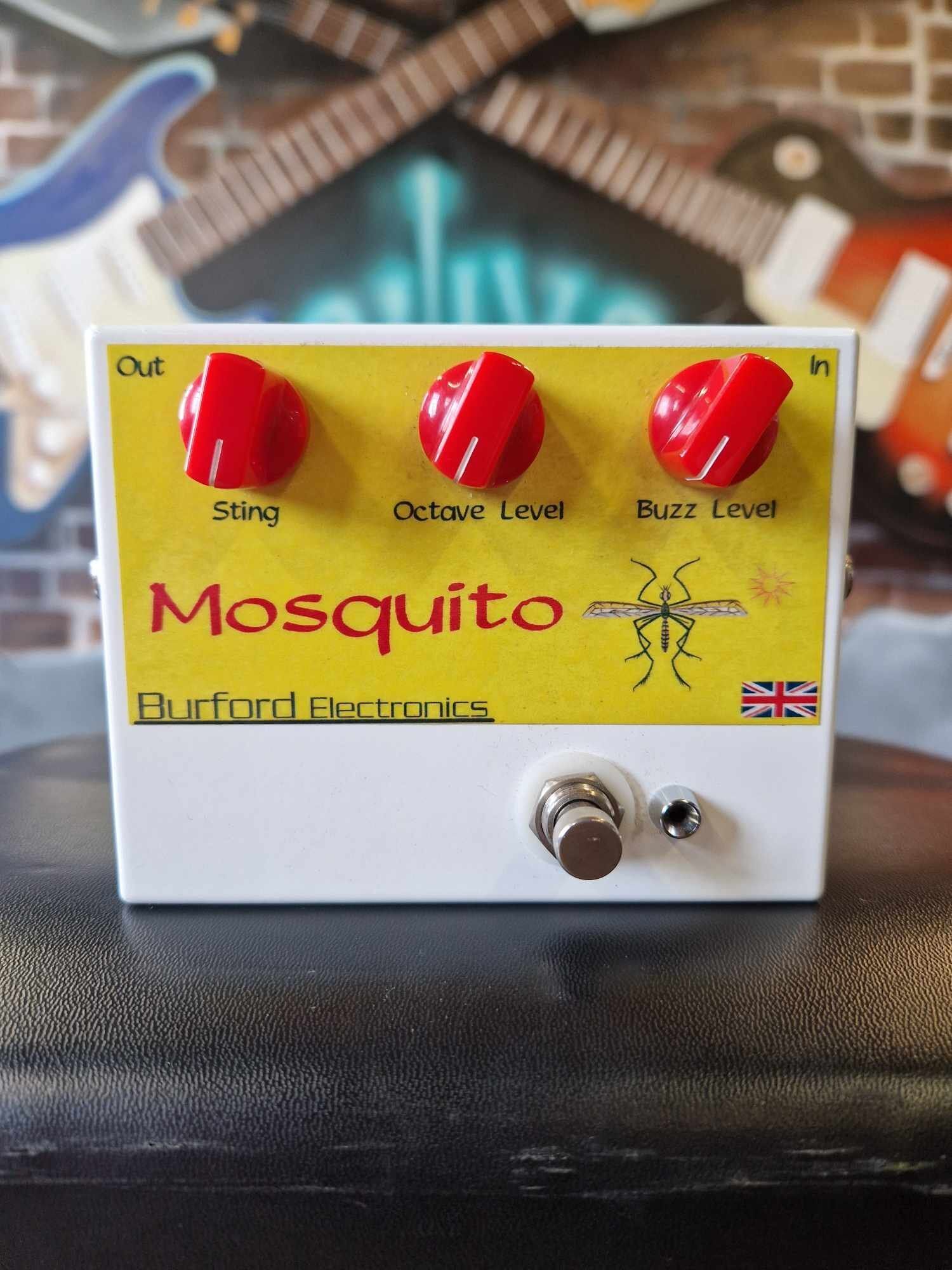
Burford Electronics Mosquito Fuzz Pedal Original - RefurbishedThis is a Burford Electronics Mosquito Fuzz Pedal. The Mosquito is a Fuzz/Octave pedal with a pretty unique sound, being closer to a fuzz more than a distortion this pedal delivers high octane fuzz sounds that will leave a sting. Here's what Burford Electronics say about the Mosquito Pedal: “A unique Octave up fuzz, which will give you pure fuzz on one twist of a knob & octave fuzz on one twist of another knob. So you can have your fuzz setting for a rich body & add octave fuzz to it or turn the fuzz down & just use the octave fuzz control for cutting lead. There is also a control called Sting, this is a tone filter that alters the voice of the octave from sharp to mellow. The octave is not over the top, on the lower register it is quite subtle, you can even play power chords and it holds together extremely well. Without that horrible modulation that is associated with some analogue octave up pedals, even some of the legendary expensive ones. Try soloing somewhere from the 8th fret upwards, it is very responsive and particularly so around 12th/15th fret and even higher. Neck and back pick ups give different sounds. Even playing positions will give different responses.”120,00 £*Shipping: 0,00 £Secure redirect to the provider
-
Microconnect USB Mains Charger for Smartphones & Tablets 5V/2.4A 12WMicroconnect USB mains charger for smartphones and tablets. Input 230 V; output 5 V / 2.4 A (12 W), enough to charge a tablet at full speed. Use with your device's own USB cable.26,49 £*Shipping: 0,00 £Secure redirect to the provider
-
Is task 4 an analogy or homology? If it is a homology or analogy, why?
Task 4 is an analogy. This is because an analogy is a comparison between two things that are similar in some ways but otherwise different. In this case, the comparison is between the task of identifying whether a given image is a cat or a dog and the process of identifying whether a given sentence is a statement or a question. Both tasks involve categorizing or classifying different inputs based on specific criteria, even though the inputs themselves are different (images vs. sentences). **
-
Why is task 4 a homology?
Task 4 is a homology because it involves identifying and analyzing the similarities and differences between two different organisms, the human and the chimpanzee. By comparing the genetic sequences and structures of these two species, we can gain insights into their evolutionary relationship and shared ancestry. This type of comparative analysis is a fundamental aspect of homology studies, as it helps us understand how organisms have evolved over time and how they are related to each other at a genetic level. **
-
How meaningful is homology and analogy?
Homology and analogy are both important concepts in biology that help us understand the relationships between different species. Homology, which refers to similarities in traits due to shared ancestry, provides valuable insights into evolutionary history and can help us infer common ancestors. On the other hand, analogy, which refers to similarities in traits due to convergent evolution, can help us understand how different species have adapted to similar environments or ecological niches. Both homology and analogy are meaningful in their own ways, as they provide valuable information about the evolutionary processes that have shaped the diversity of life on Earth. **
-
Why is task 4 considered a homology?
Task 4 is considered a homology because it involves identifying and comparing the anatomical structures of different organisms, specifically the forelimbs of vertebrates. By examining the similarities and differences in the bone structure and arrangement of these limbs, we can infer evolutionary relationships and common ancestry. This comparative analysis allows us to trace the evolutionary history of these structures and understand how they have been modified over time to suit the needs of different species. Overall, task 4 provides insights into the concept of homology by highlighting shared characteristics that are inherited from a common ancestor. **
* All prices are inclusive of VAT and, if applicable, plus shipping costs. The offer information is based on the details provided by the respective shop and is updated through automated processes. Real-time updates do not occur, so deviations can occur in individual cases. ** Note: Parts of this content were created by AI.